Food first
The Palermo food walk
Food first, with wine
- Length3.5 hours
- DrinksIncluded
- GroupUp to 12
Make-your-mind-up tool
Palermo food walk in Buenos Aires
★ 5.0 · 8,399 reviews total
Two questions, one glass
Tell us what you want in the glass and how long you have, and the matching option appears with its starting price.
Your ideal pick
from $89
Drinks with every plate across 3.5 hours, and wine with the premium option.
Your ideal pick
from $22
1 hour with an instructor, for groups of up to 10.
Your ideal pick
from $54
1.5 hours with local snacks at a Palermo address, rain or shine.
Your ideal pick
from $169
7 hours with a tasting, lunch and pickup from central districts.
Your ideal pick
from $67
1 to 3 hours in a San Telmo cellar; smart dress and a minimum age of 18.
A Buenos Aires food and wine tour is half about the glass. Here is what Argentines pour, how mate is shared, which tastings put each drink in your hand, and the rules that come with them.
Editorial team, buenosairesfoodtour.click · Updated November 11, 2026 · Quick read: 7 min
In brief
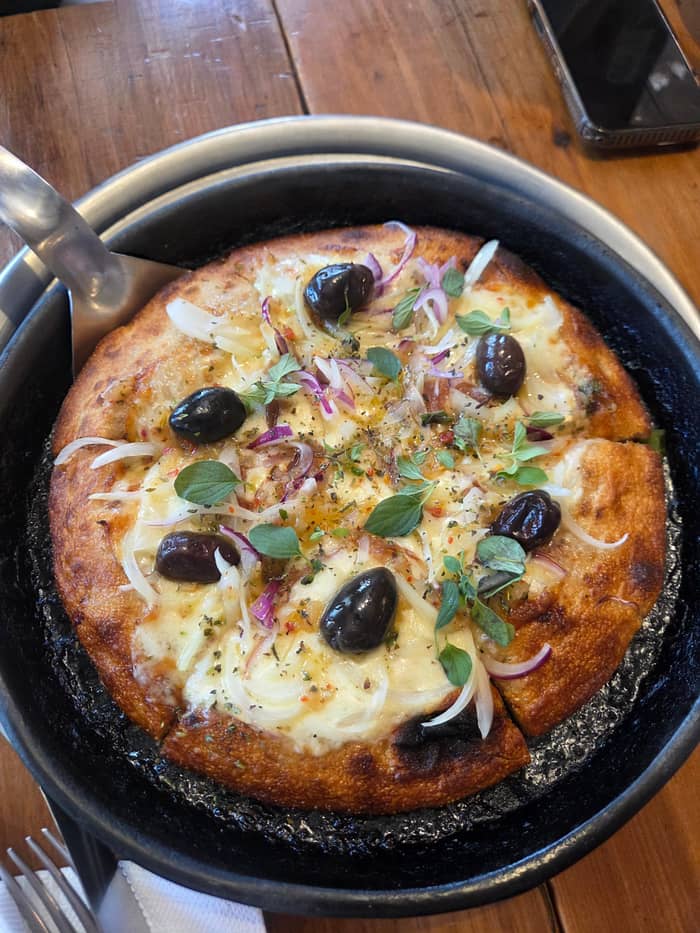
Food tours in Buenos Aires are built around plates, and the glass comes with them. The walk this site sells includes the drinks with its dishes, and the operator pairs the plates of the premium option with wine. That is enough to taste local bottles alongside the food, not a sommelier session, and it fits the way porteños drink: wine with a meal, rarely without one.
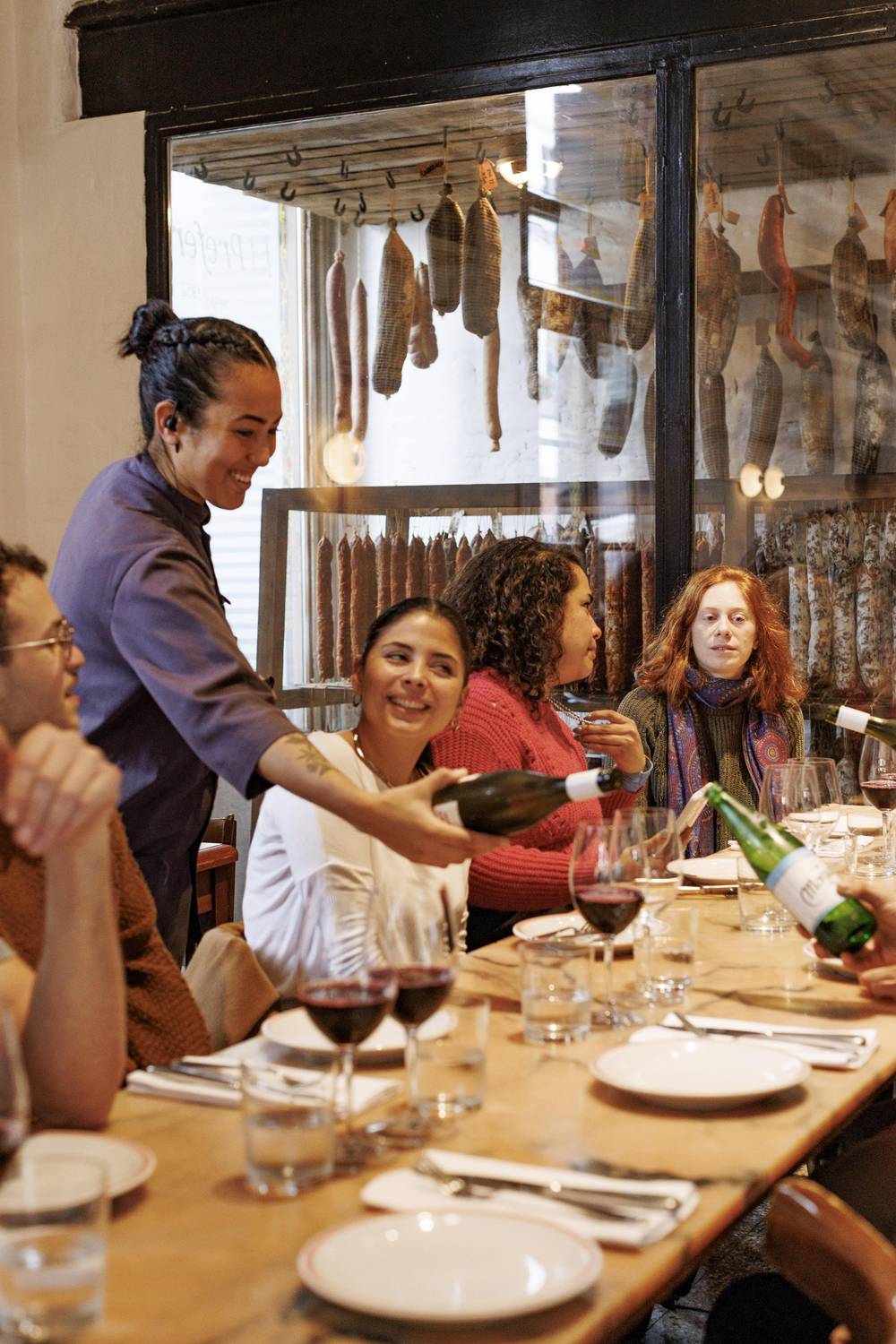
The city tourism board ties wine to the rituals of Buenos Aires: asados, evenings with friends, tango dinner shows and, above all, the long sobremesa conversations after a meal.6 On a food walk you see that last habit in action. Plates are cleared, the talk carries on, and nobody rushes the bill. Let the guide set the pace and accept that the best part of the stop may come after the food is gone.
If you want more than one glass, plan a separate tasting. Seated wine tastings in the city last from 1 to 3 hours and pour several wines, often with snacks. A walk is for eating your way through a neighbourhood, a tasting is for learning the grapes, and the two work best on different days. Eat first, early in the trip, and save the glass-by-glass lesson for once your palate has its bearings.
Grapes to know
| Grape | Colour | Where it grows | Try it with |
|---|---|---|---|
| Malbec | Red | Mostly Mendoza3 | Cheese, grilled food12 |
| Bonarda | Red | Second most planted13 | Meat empanadas13 |
| Torrontes | White | The northwest14 | Savoury food15 |
| Vermouth | Fortified | Made in Argentina16 | Before the meal |
| Fernet | Bitter spirit | Mixed with cola17 | After dinner, at a bar |
Grapes and pairings as the city tourism board and the national tourism body describe them.3,16
The national government tells the Malbec story plainly. Domingo Faustino Sarmiento brought the grape from France, where it was used mainly for blending, and in Argentina it adapted quickly with excellent results.9 Today the city tourism board notes that many call it the national wine, and that 86% of it is concentrated in Mendoza.3
Argentina ranks fifth among the world's wine producers, according to the national government.10 Winemaking reaches 19 provinces, which explains why a wine list in Buenos Aires can move from the Andes foothills to Patagonia in a few lines.11 Decree 1800, signed on 24 November 2010, declared wine the national drink, and that date is now celebrated as the Day of Argentine Wine.1
A law followed in 2013, Law 26.870, to spread the culture of making and drinking Argentine wine.2 Asking for a Malbec in Buenos Aires is therefore no tourist cliché: it is ordering the country's own drink, by law. The city board suggests it with grilled meat or a cheese board with roquefort, which tells you how flexible it is at the table.12
Time to taste
Lengths as each listing states them.
If Malbec is the red, Torrontes is the white. The city tourism board calls it Malbec's white counterpart and a grape native to Argentina, grown mainly in the northwest.14 The national tourism body adds that Salta grows a fresh, floral Torrontes in the Calchaqui Valleys at over 1700 metres.18 The city board backs it with savoury food, which makes it a natural partner for a plate of empanadas.15
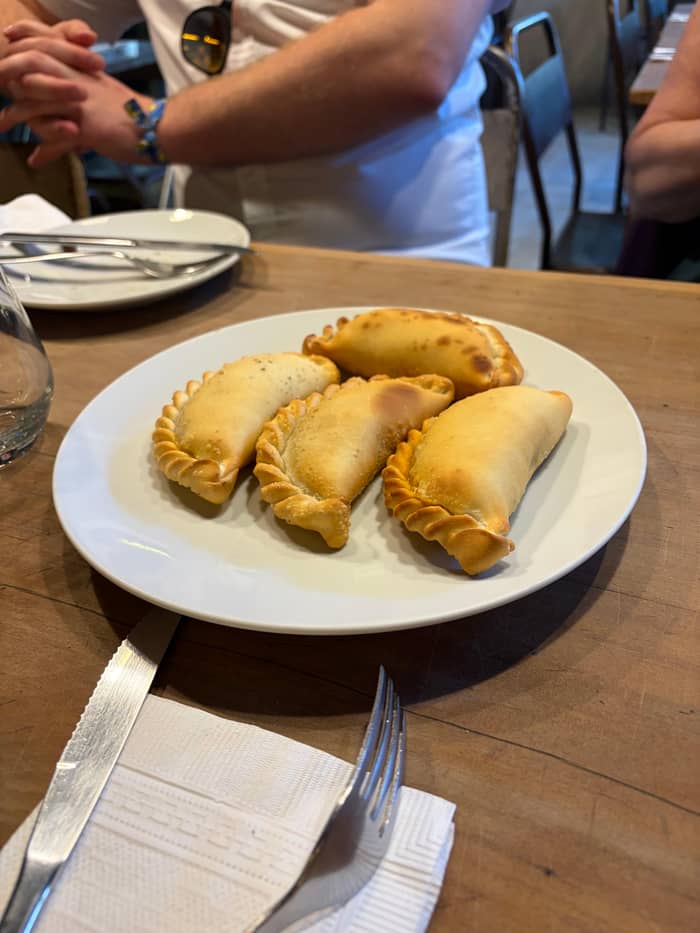
Bonarda is the quiet surprise. The city board says it is the second most planted grape in the country and recommends it with meat empanadas.13 That pairing works on a food walk too: a soft, dark red with a hot pastry from the oven is about as porteño as lunch gets. Ask for it by name if the menu offers a choice.
Argentina also makes rosé, sweet, dry and sparkling wines, and even vermouth.16 When a menu offers a vermut before the meal, treat it as the aperitif it is meant to be, and a gentle start to a long evening of eating. It is lighter on the palate than a full glass of red, and it leaves room for what follows.
Ways to drink
Food first
Food first, with wine
Wine first
Seated, with snacks
Mate first
Gaucho-style, downtown
The other drink you will meet is Fernet. City tourism tells visitors who want to blend in to order Fernet, a bitter spirit topped up with cola and loved by late-night crowds.17 It is an acquired taste, strongly herbal, and usually poured long over ice. Try it once at a bar rather than on a tasting walk, where it would overpower the food.
Buenos Aires also has a serious cocktail scene. For cocktails, the city points to Palermo, Retiro and Recoleta; for wine bars and craft beer, add San Telmo and Caballito to Palermo and Recoleta.21 Bars come alive from 10pm and clubs only from around 2am.22 A food tour in the afternoon leaves the evening free for one of these.
Beer drinkers have plenty of choice in the same districts. The city board notes a wave of craft beer halls in Palermo, San Telmo, Caballito and Recoleta, where the favourite order is a cold pint with fries topped with cheese and bacon.23 Palermo is the obvious base for that kind of evening, since its streets combine the bars and the late kitchens in a few blocks.
Price the drinks
Add the drinkers in your party and each fare scales up beside the others.
4 options compared
Add the drinkers in your party and each fare scales up beside the others.
≈
View≈
View≈
View≈
ViewGetYourGuide's starting prices, converted at the ECB reference rate; exact pricing appears when you book.
The mate round
Heat
Water between 70 and 80 °C keeps the yerba from burning.7
Fill
Most of the gourd is filled with yerba, then shaken.
Settle
The bombilla is set in the space left by the tilted yerba.
Serve
The cebador is always the same person.8
Share
Turns are respected around the circle.8
Mate is the drink of everyday Argentina. The national government reports an average of 6.4 kg of yerba mate a year per person, and yerba in more than 90% of homes, citing the national yerba mate institute.4 Argentina is also the world's main producer and exporter of the leaf.24 In Argentina the word mate names both the infusion and the vessel, most often a gourd.25
In the city tourism board's words, mate is bitter, herbal and full of caffeine, drunk through a metal bombilla from a hollow gourd that a single server keeps refilling for the group.26 Its own step-by-step guide adds rules worth knowing. The water should be between 70 and 80 °C, neither lukewarm nor boiling.7 And the server, the cebador, is always the same person, while everyone waits their turn.8
A guided tasting is the easiest way for a visitor to try it properly. An instructor pours for 1 hour in Palermo Soho, from $22. A gaucho-style bar downtown runs 1.5 hours from $25 and lists 5 yerbas with medialunas. A masterclass in Recoleta pairs mate with Argentine pastry for 1 hour, from $45.
Video
Wine Folly on YouTube · Nothing is fetched until you hit play.
if you want to blend in, be sure to try Fernet, a bitter spirit, mixed with coke, the tipple of choice for many revellers.
Drink smart
A seated tasting is the way to learn the grapes properly. In Palermo, a Malbec-focused session pours for 1.5 hours with local nibbles, costs from $54 and runs whatever the weather. A hotel wine bar in Palermo hosts tastings for 8 guests at most, from $60. Its cellar is down a narrow staircase with no lift, and its listing advises against the visit for children or anyone with limited mobility.
In San Telmo, a tasting of wines from the north to the south of the country runs 1 to 3 hours, from $67. It is held in the cellar of a tango house on Peru street, sets a minimum drinking age of 18 and asks for smart dress, with no jeans, sportswear or sneakers. Bring proper shoes and a collar if that one is on your list.
For vineyards, you have to leave the city. A winery excursion beyond the city limits fills 7 hours with a tasting, a lunch and a hotel pickup in the central barrios, priced from $169. With 221 reviews, it is a tested way to see where wine comes from without flying to Mendoza. Combine it with a food walk on another day and you have a full Buenos Aires food and wine tour of your own.
If you are wondering what to eat and drink in Buenos Aires, start with the pairings the city itself suggests. Bonarda goes with meat empanadas, and Malbec with a cheese board.13,12 A white Torrontes goes with savoury food.15 Mate goes with sweet pastries, and the city recommends hot chocolate with churros, a speciality of central cafes, as a breakfast idea.27,28
The rules are simple. Nobody under 18 may drink alcohol, and open drinking on the street or inside sports grounds is banned.5 Supermarkets may sell alcohol until 10pm, while restaurants, bars and clubs may serve until 5am, and no alcohol is sold on the eve or the day of elections.19 Smoking is banned in closed public spaces, including restaurants, bars and cafes.29
One safety habit is worth adopting. The UK government advises never leaving a drink unattended in bars and restaurants and never accepting food or drink from strangers.20 On a guided walk this is easy, but keep it in mind for the bars you visit afterwards. Pace yourself too: tastings add up, and water between stops keeps the evening enjoyable.
FAQ
Every stop includes drinks, and on the premium option the operator matches the plates with wine.
Nobody under 18 may be served, and public drinking outdoors is banned.5
A Palermo Soho tasting starts from $22, a downtown mate bar from $25.
Yes: a seated Malbec session of 1.5 hours with nibbles, priced from $54.
Sources
Hungry in Buenos Aires? Ask a real person here.