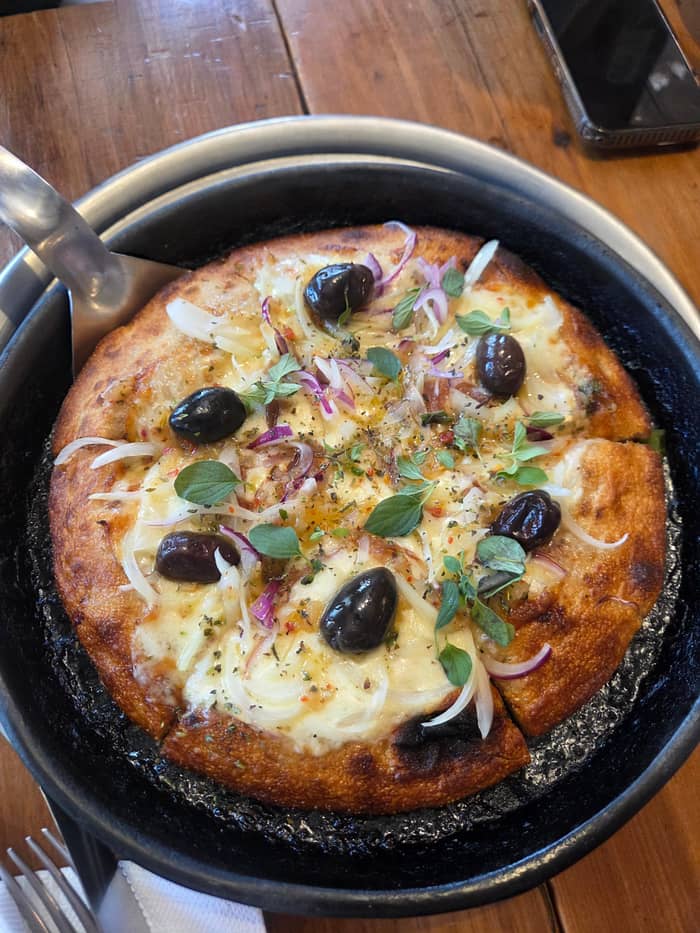
First night out
Palermo
Modern, busy, late
- MoodTrendy
- ZonesSoho, Hollywood
- After dinnerCocktail bars
Locate your stop
The quick version
Where to eat in Buenos Aires depends on the barrio: Palermo for new kitchens and bars, the centre and San Telmo for historic cafés and old eateries, Recoleta and Puerto Madero for a smart dinner.
Good to know
Open 42 stops
First pick a route, then tap any pin or stop for details and Google Maps.
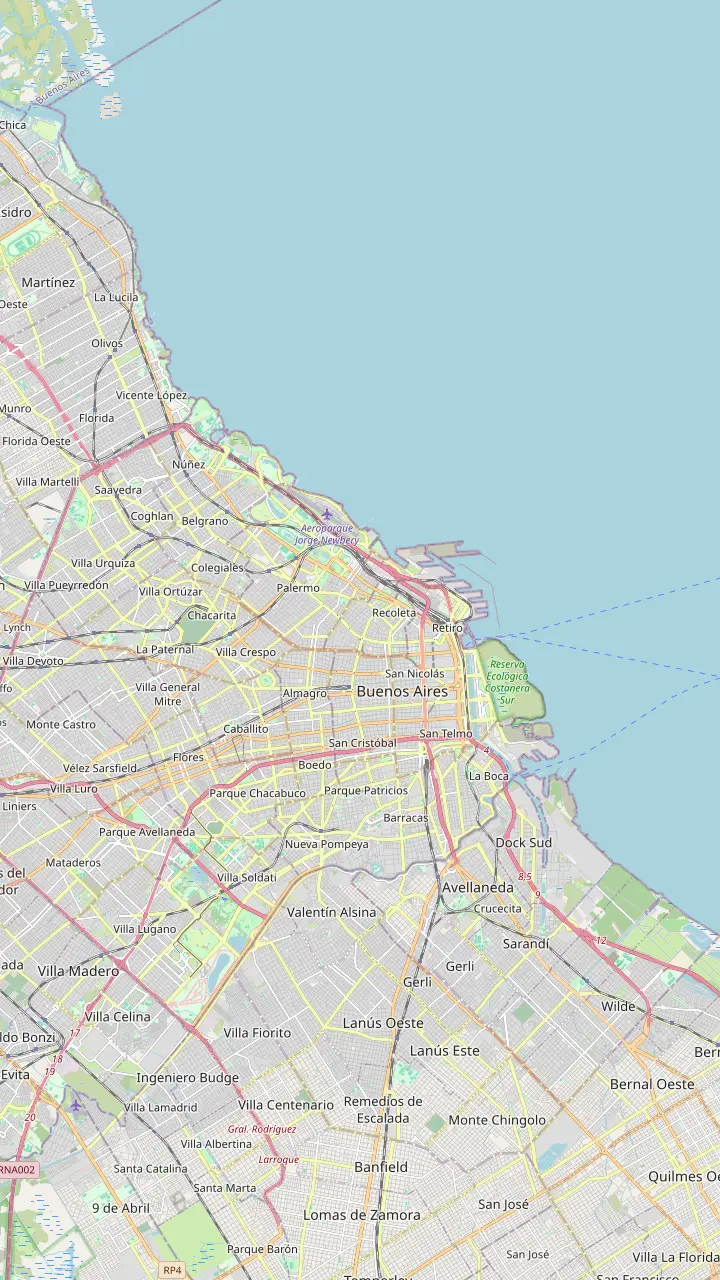
The oldest café in the city, founded in 1858; book ahead through its website.
Google MapsFounded in 1860 by a Spanish immigrant: puchero, paella and a sign banning political arguments.
Google MapsA bodegón on this corner since 1986, with roots in a canteen from 1927.
Google MapsSan Telmo café-bar with a low bar for picadas, tortillas and home-made ravioli.
Google MapsA La Boca corner bar open since 1915, cooking fish and seafood bodegón plates.
Google MapsRecoleta's classic café at Junín and Quintana, near the Pilar church and the cemetery.
Google MapsThe heart of Palermo Soho; an artists' fair from 11 h on Fridays, weekends and holidays.
Google MapsA restaurant strip that formed in the early 1990s beside the polo grounds.
Google MapsAlmagro's grand café from 1884, famous for its merienda; open daily 6 to 00 h.
Google MapsVilla Crespo pizza since 1955, with chimichurri in the tomato sauce.
Google MapsGalician fish and seafood in Caballito since 1960; expect a queue on the pavement.
Google MapsA dining room on the old docks of Puerto Madero, now a residential and dining district.
Google MapsChinatown in Belgrano: Asian restaurants and sidewalk eating on pasaje Echeverría.
Google Maps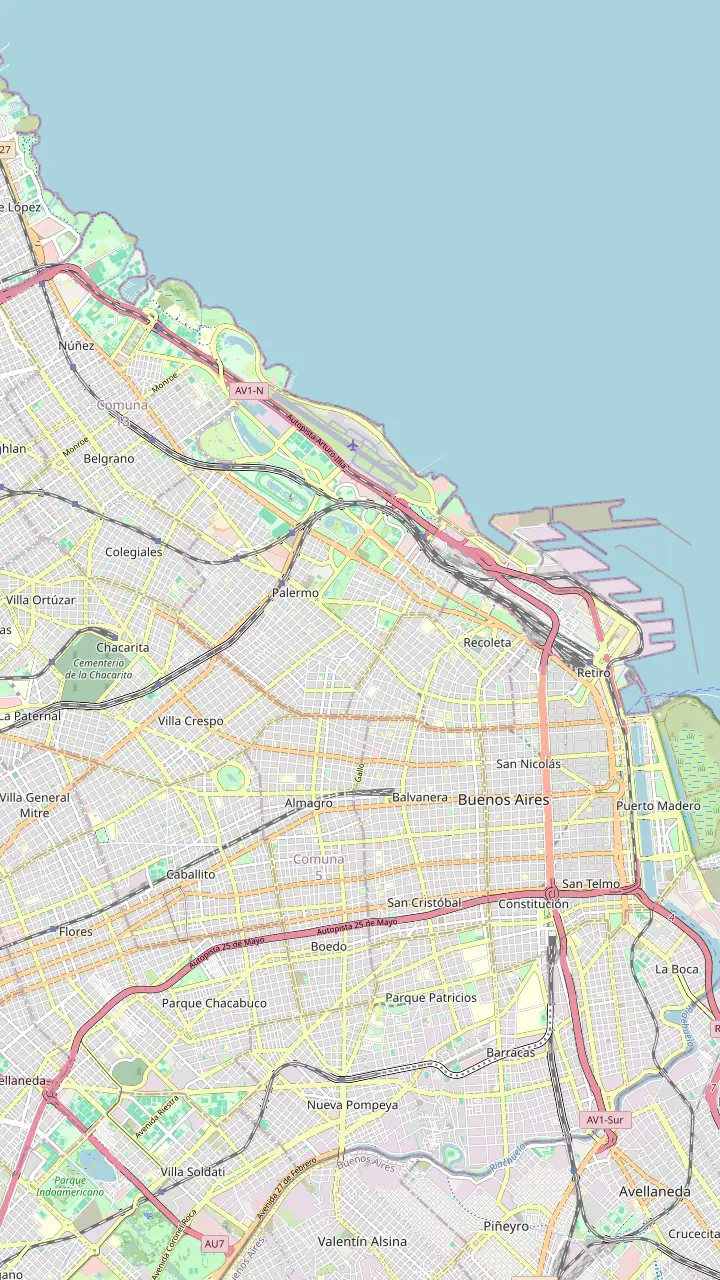
The only 2-star MICHELIN restaurant in the city, ranked 35 on Latin America's 50 Best 2025.
Google MapsRanked 21 on Latin America's 50 Best Restaurants 2025.
Google MapsThe restaurant chef Germán Martitegui called spectacular.
Google MapsA Recoleta classic that chef Narda Lepes recommends.
Google MapsFounded in 1896; hen puchero is the flagship dish.
Google MapsAn Italian cantina from 1926 that still sells hand-made pasta by weight.
Google MapsRecommended for drinks by Martitegui and Lepes; you can eat at the bar.
Google MapsA former general store on Borges's childhood block, ranked 24 on the 2025 list.
Google Maps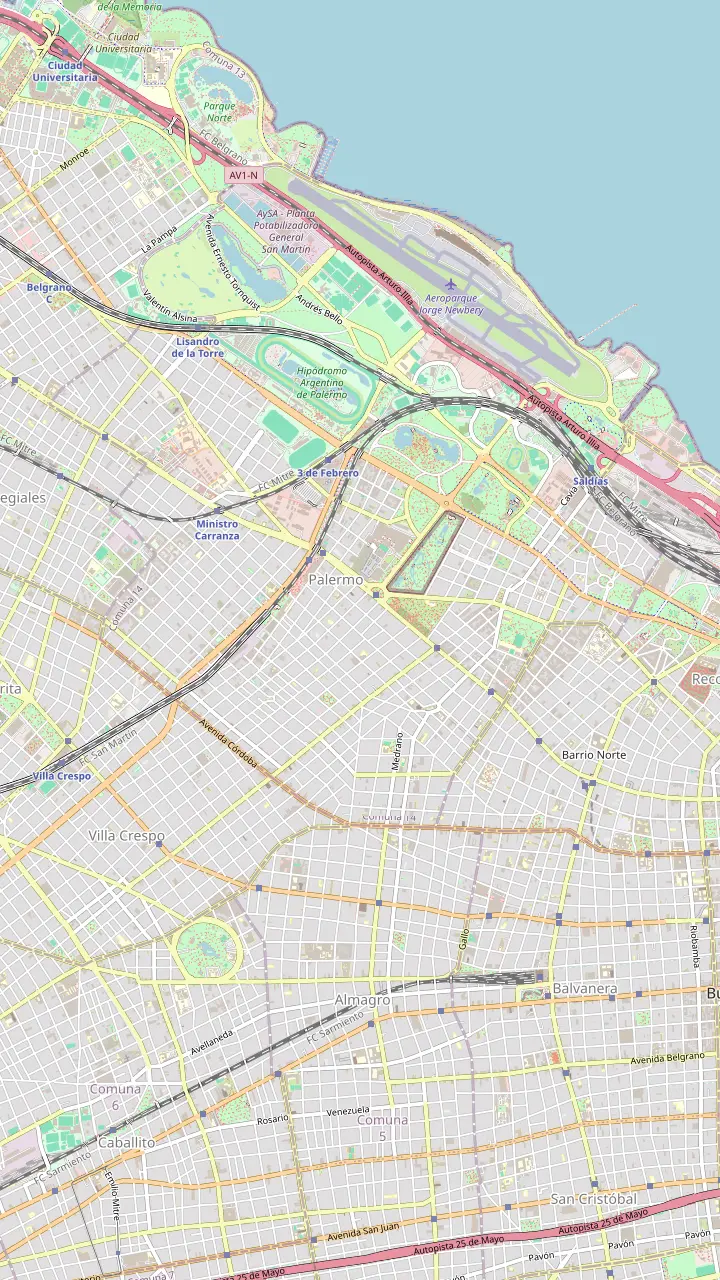
The premium option of the Palermo food walk sold on this site starts on Nicaragua street; the standard one meets on Thames street.
Google MapsRoman-style pizza from a wood oven, open since 2016.
Google MapsChef Gonzalo Aramburu's breakfast pick.
Google MapsNeapolitan pizza with San Marzano tomatoes.
Google MapsPizza and famous fried empanadas.
Google MapsA rooftop for creative cocktails, open Tuesday to Saturday evenings.
Google MapsAn afternoon coffee in the garden, a chef's tip.
Google MapsArab food that Martitegui calls good, nice and cheap.
Google Maps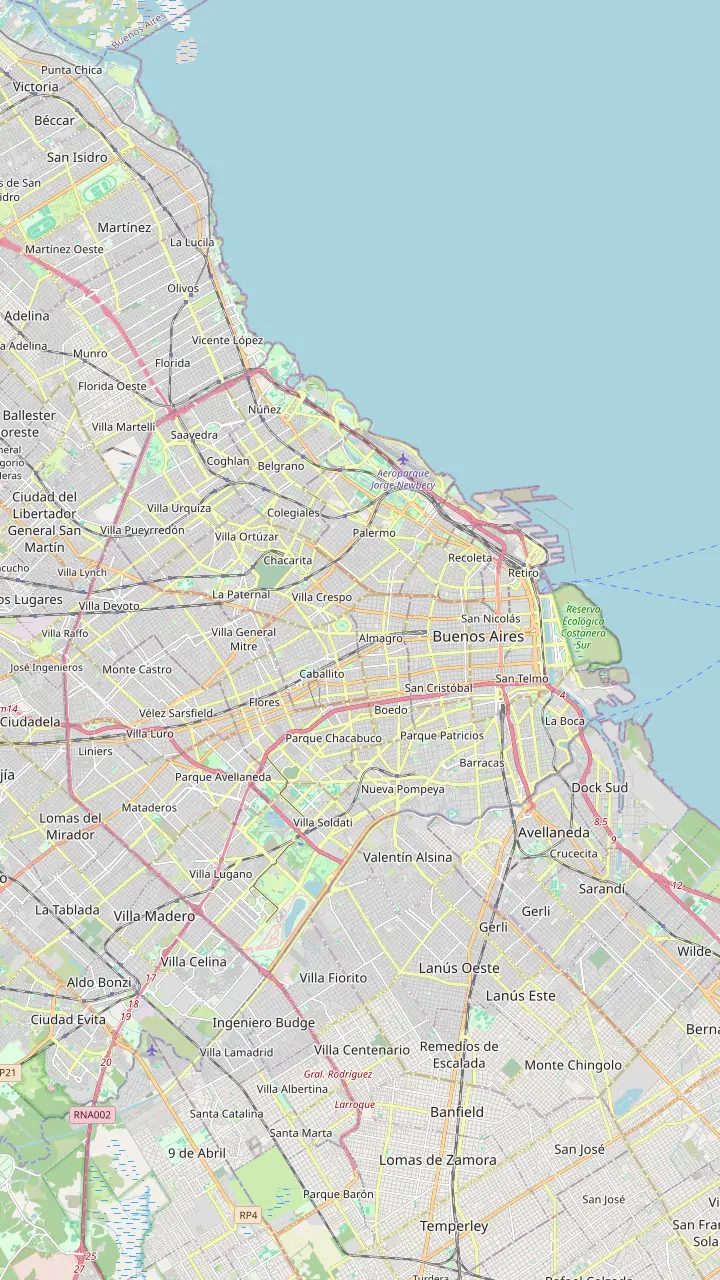
Since 1932, 70 kinds of pizza; open until 01 h, 02 h at weekends.
Google MapsPizza al molde with golden mozzarella since 1932.
Google MapsSince 1956; pizzas arrive in their old pans.
Google MapsSince 1934; eat standing at the counter or at a table.
Google MapsSandwiches eaten at the bar, a chef's cheap pick.
Google MapsPizza al molde or a la piedra and three kinds of fainá.
Google MapsFood stalls among antiques, open daily 9 to 20 h.
Google MapsHeart of the Sunday San Telmo fair, more than 230 stalls.
Google MapsStand-up pizza counter: fugazza, fugazzetta and fainá, no tables.
Google MapsAlmagro pizzeria from 1927, known for fried meat empanadas.
Google Maps350 hectares of green by the river, good for a picnic.
Google MapsSunday fair, March to December: empanadas, locro and tamales.
Google MapsA vegetarian shiitake ramen a chef recommends for under 10 dollars.
Google MapsMapping data © OpenStreetMap contributors
Buenos Aires eats by neighbourhood: trendy plates in Palermo, century-old cafés downtown, market stalls in San Telmo, family canteens in Almagro. Here is what each barrio does best, with a pin for every stop.
Editorial team, buenosairesfoodtour.click · Updated November 11, 2026 · Quick read: 8 min
In brief
The quickest answer to where to eat in Buenos Aires is a neighbourhood, not a single restaurant. The city tourism board sorts it like this: the trendiest dining is in Palermo, especially Las Cañitas, Palermo Soho and Palermo Hollywood, while the traditional cafés and eateries cluster in the central districts of Montserrat, San Nicolás and Balvanera and on the cobbled streets of San Telmo.1 Choose by the mood you want, then walk until something smells right.
For a smarter night, the board points to Recoleta and to the regenerated docks of Puerto Madero, where many of the upmarket contemporary rooms sit.2 If you are after modern cooking or a foreign cuisine done well, the same source sends you to San Telmo, Puerto Madero, Las Cañitas and both halves of Palermo.5 That leaves the outer barrios, Almagro, Villa Crespo, Caballito and Boedo, for the family canteens that rarely see a tour group.
A couple of habits help wherever you land. Ask locals: the tourism board itself says it is often worth asking locals, especially if you want to get off the beaten track.6 And book: a popular restaurant is worth reserving, especially at the weekend.4 Walk-ins work well at lunch and in cafés, much less at prime time, which starts at 9.30 PM and runs later at weekends.7 On a weeknight you have far more choice.
Pick your barrio
| Area | Best for | Try |
|---|---|---|
| Palermo | Trendy dining, bars | Plaza Cortázar area |
| Centre | Historic cafés, pizza | Tortoni, Güerrín |
| San Telmo | Market lunch, old bars | Mercado San Telmo |
| La Boca | Port-era bodegones | Bar Portuario |
| Recoleta | Classic, upmarket | La Biela, Oviedo |
| Puerto Madero | Waterfront dining | The docks |
| Almagro | Cafés, cantinas | Las Violetas |
| Belgrano | Asian food | Chinatown |
Areas and places described by the city tourism board, Visit Argentina and chef Narda Lepes.1,8,21,22,23,24,25,12
Palermo is the city's busiest food district. The tourism board calls part of this huge barrio the most active food hub of Buenos Aires.14 It splits into named zones. Palermo Hollywood got its nickname when television studios and production houses settled there early this century.15 Restaurants followed the studios, and the low houses and old workshops filled with kitchens.
Palermo Soho, across Avenida Juan B. Justo, borrowed its name from SoHo in Manhattan and Soho in London because of its fashion and design boutiques.16 Its focal point is Plaza Julio Cortázar, with places to eat at every price around it.17 In the early 1990s restaurants also clustered on Báez street in Las Cañitas, near the polo fields.13 Our Palermo guide walks these streets in detail.
Palermo is also where the city drinks well after dinner. Palermo, along with Retiro and Recoleta, is where the tourism board finds the standout cocktail bars.18 Expect small plates, natural light at lunch and full rooms late at night. It is the obvious first evening for most visitors, and the neighbourhood where the Palermo food walk featured on this site spends its 3.5 hours. Come hungry and in comfortable shoes.
Downtown is where Buenos Aires keeps its memory. Café Tortoni on Avenida de Mayo, founded in 1858, is the oldest café in the city.8 Visit Argentina recommends booking through its website because demand is high.29 Nearby, El Imparcial, from 1860, may well be the oldest restaurant in town; a sign over its counter still bans arguments about politics and religion.30,31
The old Spanish dining rooms are the centre's speciality. El Imparcial serves Spanish-style puchero, paella and octopus a la gallega.32 On Avenida Callao, El Tropezón was founded in 1896, sat closed for 34 years and reopened in 2017; Carlos Gardel had his own table there.33,34 Chiquilín, at Sarmiento and Montevideo since 1986, gave its old name to a famous tango by Astor Piazzolla.35,36 These rooms suit a long lunch with the newspaper.
Avenida Corrientes is the pizza mile. Güerrín opened in 1932, Las Cuartetas the same year, and El Palacio de la Pizza in 1956, all within a few blocks of the theatres.10,37,38 Many of these places keep a standing counter for a quick slice and a seated room for the full meal.39 Order a portion at the counter like an office worker heading home, or take a table and a bottle of wine. Our cheap eats guide covers them one by one.
Choose a barrio
Name your perfect evening and we will name the barrio.
If I want the buzz and new kitchens
Palermo
The city's most active food hub.14
If I want history with my coffee
The centre
Café Tortoni opened in 1858.8
If I want a cheap, lively lunch
Mercado San Telmo
Food stalls among the antiques.21
If I want a smart, quiet dinner
Recoleta
If I want something non-Argentine
Belgrano's Chinatown
If I want to eat where locals eat
A bodegón in Almagro
Fresh pasta weighed out at Spiagge di Napoli.28
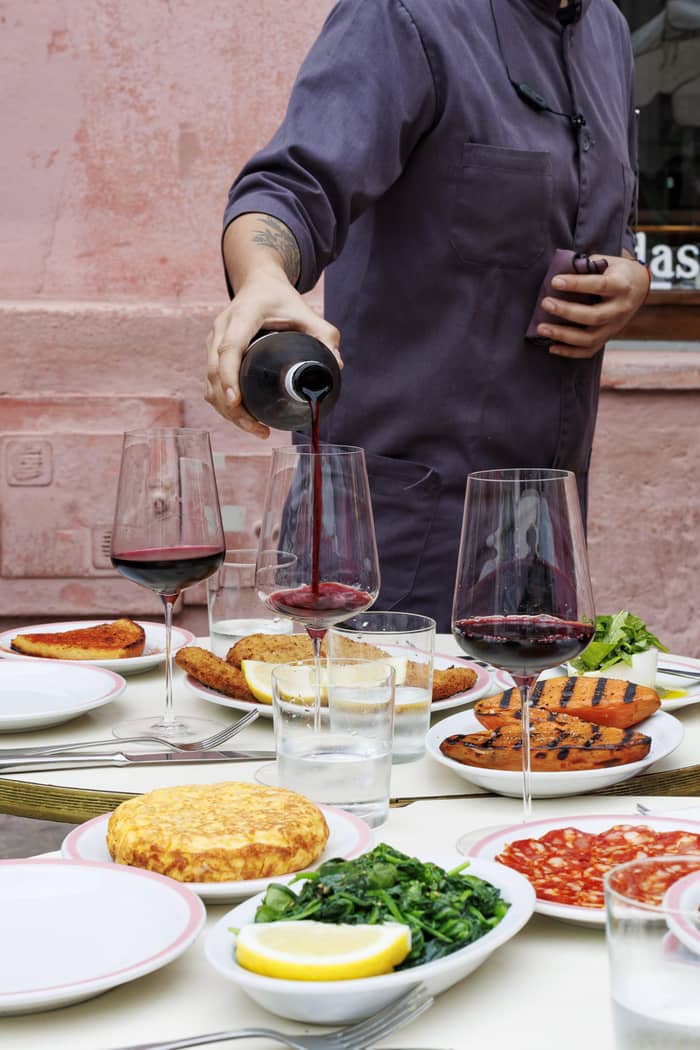
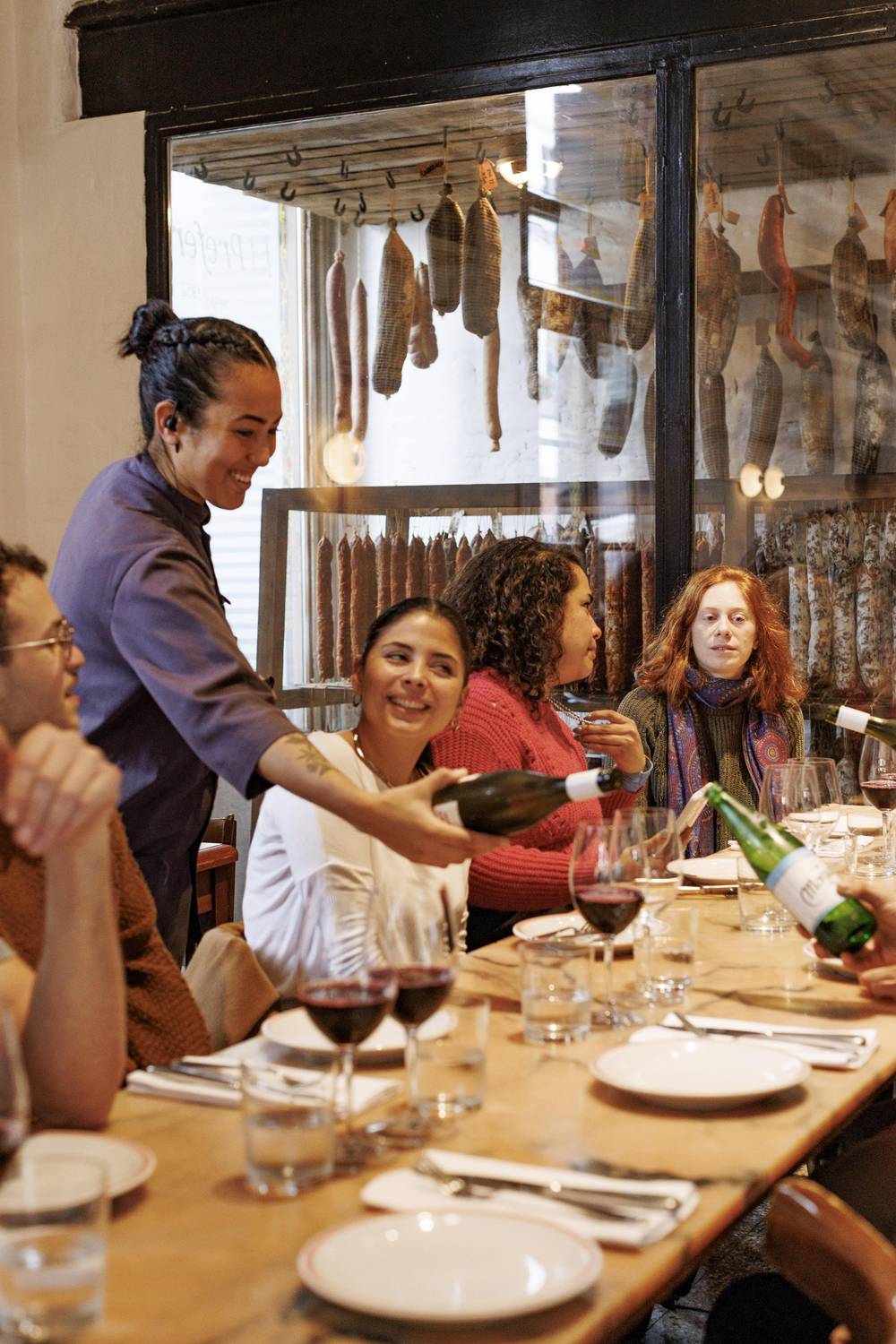
Barrios for different evenings
First night out
Modern, busy, late
Market lunch
Cobbles and old bars
Local feel
Cafés and cantinas
San Telmo is one of the city's oldest quarters, left by its wealthiest families after the yellow fever epidemic of 1871 and later revived.81 Today the tourism board counts about 150 restaurants there.26 The anchor is Mercado San Telmo, opened in February 1897 and declared a National Historic Monument in 2000.9 Among antiques and old photographs you can eat shawarma, Salta-style empanadas, raclette or a choripán.21
The bars are the other draw. Bar El Federal, at Perú and Carlos Calvo, has a low bar where you can sit for picadas, tortillas and home-made ravioli.40 Visit Argentina singles out its knife-cut beef empanada.82 Facing Parque Lezama, Bar Británico opened in 1928 and keeps late hours, every day from 9 to 3 h.83,84 Pirilo on Defensa is a stand-up pizza counter in the Genoese friggitoria style.71
La Boca is where the Italian port community started much of this. The Banchero family opened their pizzeria there in 1932.85 Bar Portuario has served bodegón plates on the corner of Pinzón and Caboto since 1915, with fish and seafood the speciality.22 Eat by day and stay near Caminito: Canada's travel advice says to remain on Caminito Street and to avoid the area after dark.80 Lunch, not dinner, is the meal for this barrio.
Let a guide choose
Choose your group size and compare guided food walks in Palermo and San Telmo.
3 options compared
Choose your group size and compare guided food walks in Palermo and San Telmo.
≈
View≈
View≈
ViewGetYourGuide's starting prices, converted at the ECB reference rate; exact pricing appears when you book.
How the eating map grew
1858
The city's oldest café.8
1897
Opened in February that year.9
1932
Güerrín opens on the avenue.10
1970s
The first food district peaks.11
1980s
Asian families settle in Belgrano.12
Early 1990s
Restaurants gather on Báez street.13
Recoleta was the first food district of Buenos Aires and had its golden age in the 1970s; institutions such as La Biela survive from that era.86,11 La Biela sits at Junín and Avenida Quintana, a short walk from the Pilar church and the cemetery.41 It began as a tiny bar of only 18 tables.87 Take a coffee on the terrace before or after the cemetery, then look for dinner on the side streets.
For a classic Recoleta meal, chef Narda Lepes named Oviedo, on Beruti, as a place where anyone has a good time.23 At the top end, Aramburu, on Vicente López, holds 2 MICHELIN Stars, the only Buenos Aires restaurant with that rank.48 Recoleta is quieter than Palermo at night, with older dining rooms and well-dressed regulars, and it rewards booking a table rather than wandering in hope of a free seat.
Puerto Madero is the newest dining district. Its old docks, built in 1900 on the English model, were rescued from neglect and filled with homes and restaurants.24 Restaurants now line the old docks, and beyond them the Costanera Sur promenade was the place porteños strolled in the early 20th century.88 Come at sunset for the light on the water, then decide whether the bill suits you.
Video
Jeremy Jacobowitz on YouTube · Nothing is fetched until you hit play.
it's often worth asking locals for their recommendations, particularly if you want to go somewhere off the beaten track
Before you go out
Ask a local for the best place to eat in Buenos Aires and you may well be sent somewhere tourists rarely go. In Almagro, Las Violetas has served its famous afternoon tea since 1884, and a queue forms most afternoons.25,89 It opens from 6 to 00 h every day, so breakfast there is easy too.43 Pin Pun, on Corrientes, was founded in 1927 by the same Italian immigrants who opened Güerrín, and is known for fried meat empanadas.72
Spiagge di Napoli, on Avenida Independencia, has fed Almagro since 1926 and is still a family affair.53 In Villa Crespo, Nápoles has baked pizza since 1955 with a tomato sauce seasoned with chimichurri.44,45 Pasaje Cantina is run by a pair of Uruguayan sisters with more than 40 years in the business.90 In Caballito, Pucará has cooked Galician fish and seafood since 1960, and you often wait on the pavement for a table.46,47
For other cuisines, go north to Belgrano. Its Chinatown grew from an Asian immigration wave in the 1980s; the Chong Kuan temple opened in 1988.12 On pasaje Echeverría people perch on the kerb to eat, because most counters have neither tables nor waiters.27 Back in the south of the city, chef Germán Martitegui calls the Korean grills of Bajo Flores, along Carabobo Avenue, the city's hidden gem.91 Go with friends and order a spread to grill at the table.
How do you find places to eat in Buenos Aires that are not on every list? Start with the bodegón, the old neighbourhood canteen. The tourism board explains it as the porteño fusion of the Italian and Spanish migrations, with pasta, minutas such as milanesas, some seafood and grilled meat.92 Some have been open for more than 100 years.93 When it runs, the city's Semana de los Bodegones gathers more than 80 of them with special menus.94
Watch the waiters, too. A bodegón is known for career mozos who have worked the same floor for decades and carry five plates at once.95 At a historic café the rhythm is slower: the city counts more than 70 bares notables, recognised as part of its heritage, where a cortado can last an hour.96 Many stay open late with drinks and dinner, while some close around 7 PM, so check before you walk over.97
Finally, mind the clock. Restaurants serve lunch, close in the afternoon and reopen for dinner, so plan the gap with a café or a museum.77 Dinner starts from around 8 PM and runs past midnight.78 If you would rather have a local choose for you, a guided food walk in Palermo or San Telmo does exactly that, and the calculator on this page compares the walks for your group in a couple of taps.
FAQ
The city tourism board calls part of Palermo the most active food hub of Buenos Aires.14
Montserrat, San Nicolás, Balvanera and San Telmo hold most of the traditional cafés and eateries.1
Reserve the well-known places, the tourism board says, above all at the weekend.4
Chinatown is part of Belgrano and grew from an Asian immigration wave in the 1980s.12
Canada says keep to Caminito itself and leave La Boca before nightfall.80
Sources
Hungry in Buenos Aires? Ask a real person here.